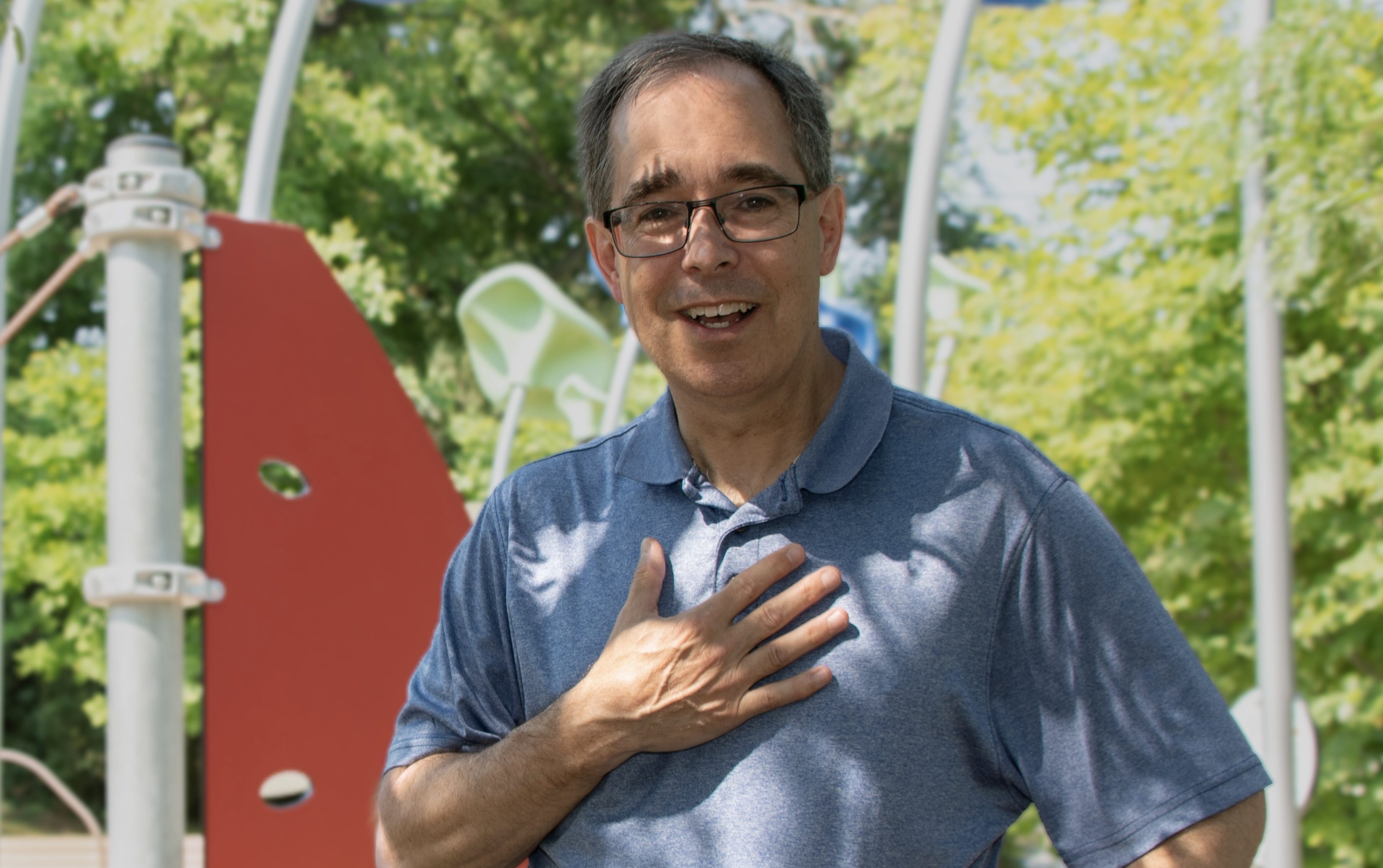
My Promise: Attentive Leadership for Ward 3 and Citywide Issues
Read about any topics here that interest you! You’ll notice that three themes come up often: stability, connection, and sustainable use of resources. These elements are the basis of a healthy ecosystem, whether that be a forest or a municipality (or both!).
I want to hear from you about these topics. Understanding your experiences, knowledge, expertise, and ideas will make me a more effective Council member. If there’s an issue below that you want to share your perspective on, please email me at rogerforward3@gmail.com.
Climate action. Everyone I know in Takoma Park wants to do more, sooner, more quickly, to combat climate change locally. As a longtime activist, advocate, and adopter of green technologies and practices (as well as a founding plot-holder in the Sligo Mill Overlook community garden!), I will help Ward 3 residents access the information, resources, expertise, and neighbor know-how they need to change appliances, heating, cooling, vehicles, or landscaping, to go solar, to hop on alternative transportation, or to get into gardening, tree-planting, rainscaping, or food forests.
Damaging storm events. Whether you live between Manor Circle and Sligo Creek or anywhere draining to Takoma Branch, you either are somebody or know somebody for whom a downpour is no longer a thrill but a threat. Climate change is intensifying rainstorms and pushing stormwater infrastructure beyond capacity, leading to costly losses for property owners. Local residents with know-how in Takoma Stormwater Solutions have proposed smarter strategies that support opportunities for managing rain not just in the public right-of-way but across the whole catchment basin. With experience in stormwater policy making, and with intimate knowledge of our ward’s slopes, valleys, pipes, and streams, I will listen and advocate for ways to help property owners slow raindrops closer to where they fall and keep their healthy, water-loving trees going strong.
Street safety. Sharing our streets is a balancing act. Cut-through traffic (and stop-sign running) raises stress levels and threatens children and pedestrians. We’re seeing issues on Lincoln, Boyd, and Jackson; on Sycamore, Beech, Woodland, and Columbia; on Walnut, Westmoreland, Elm, and Pine. I’ve observed these patterns closely as they’ve developed and shifted over the past several years. I will advocate for a resident-informed strategy that responds systematically to how and why drivers are taking neighborhood routes and driving like they’re on a highway. I’ve personally observed the intersection of Walnut and Eastern functioning as a rush-hour gateway to neighborhood streets, with downstream effects spanning many blocks. An all-way stop or traffic signal at that intersection is important for safety and can connect neighbors across the border. (A stop sign alone might make the route more heavily used, as seems to have happened at Lincoln and Carroll Avenues.) I will push for a careful, comprehensive study, including temporary installations and experiments, to find an integrated set of solutions that improve safety while discouraging and slowing non-local through-traffic.
Anti-racist action. Takoma Park has approximately 50% white residents, but participation in public processes is overwhelmingly white. Our community has never benefited from this pattern. Only with inclusive and balanced decision making can we confront our current and future challenges. Seven years after adoption, Takoma Park’s commitment to evaluating decisions through a racial equity lens remains inadequate. Current efforts to increase access and participation fail to consider how inequity in Takoma Park stems from our local history and intersects with economic disparities and residential segregation. For me, the only way to live out my white identity is as an advocate and ally for undermining racism, every day and in every social setting. That’s what you will get from me on the City Council. I will insist that the City use available tools to prevent displacement and reduce racial disparities. I will prioritize performance measures and budgetary choices that address issues identified by and affecting residents of color. And because climate change is inherently racist – in its causes and emerging impacts – I will push to accelerate our local climate response and to pursue housing objectives that make our community welcoming to climate refugees.
Housing supply. When you grow up in Takoma Park, or when you move here, pretty quickly you realize that it’s not just a zip code – it’s a place you belong to. No one should be forced to leave Takoma Park by redevelopment or rising rent (or unaffordable taxes). And, preserving the unique diversity of our community, including our public schools, requires that we ensure no displacement of current residents from their homes. With skyrocketing rents in the metro area, there’s a great need to protect and grow access to more affordable housing. Recent debates about the Minor Master Plan Amendment (MMPA) were focused on Wards 4 and 5. Housing affordability is a Ward 3 issue, too, with young adults looking to live where they grew up, newer buyers confronting monumental mortgages, and longtime residents looking for ways to stay local while downsizing or tightening their budgets. The former hospital campus provides a rare opportunity to build significant housing in the city, as does redevelopment along New Hampshire Avenue. As a D.C. native fully aware of our region’s legacy of residential segregation and racialized displacement, I will resolutely advocate for protecting Takoma Park’s unique mix of housing and for incentivizing any growth so as to favor stability and diversity. The first priority is talking as a community about what we want to see Takoma Park become and then setting specific targets of the number, kind, and size of units we want to see built, where, and by when. I will defend our community’s long-standing commitment to rent stabilization, and I will advocate for County, state, non-profit, and community investor involvement in generating more housing with affordable rent. Yes, denser infill development can help mitigate climate change, but it can’t happen at the expense of social justice or ecological health. (I’ve been advocating for adding housing in Takoma Park for years. Read more on this topic here).
Property taxes. Most people I know are willing to contribute more in taxes than their Silver Spring neighbors to support the inclusive, community-oriented services and programs that Takoma Park offers. But paying 50% more on top of Montgomery County taxes raises questions: Are we fulfilling our objectives efficiently? How do we know we’re achieving better outcomes than County services and programs? Homeowners are seeing their Takoma Park tax bills rise faster than the rate of inflation year after year. (Renters absorb property taxes, too, when landlords have to pass their costs on.) Everyone needs not only affordability but also predictability, whether for current expenses, energy upgrades, college tuition, health premiums, or retirement. I have training as a budget analyst and years of familiarity with Takoma Park’s revenue, expenditures, program structures, and policies. I’ve been invited to work with resident groups, my council member, and former mayor Bruce Williams to get community input when hard budget choices were needed. Our city is running a structural deficit that will take common sense and creativity to address in an equitable way. And we’ve seen the city struggle to avoid cost overruns and keep large capital projects within budget. I will provide communication and oversight throughout the budget cycle. I will work with colleagues and the City Manager on our budget process, objectives, and measures. And I’ll raise good questions about how we might get more out of County services without compromising our local values or identity.
New connections. In a few months or years, Ward 3 residents are likely to see: an Eastern Avenue reconfiguration by DDOT, a new bikeway through Pinecrest, the Metropolitan Branch Trail reaching through Old Town, a new Bus Rapid Transit route on New Hampshire Avenue, a complete overhaul of Metrobus routes, and a whole new neighborhood across Sligo Creek on the former Adventist Hospital campus. New connections are crucial to get into place before any new development that increases density and generates more trips. With a masters in public administration, educated in land use policy and urban planning, and fully familiar with the details of these sites and routes, I will monitor projects closely, keep two-way channels of communication open with residents and agencies, and push for getting the details right. See my new guide, “”A Walkabout of the Pinecrest New Hampshire Avenue Area and the Pinecrest Bikeway Route,” here.
Parks and nature. Our beloved places for play, nature-watching, dog-walking, and meeting up are highlights of Ward 3. My kids have loved our City-owned gems of Spring and Jackson-Boyd parks and Columbia, Circle, & Dorothy’s Woods,as well as our County-managed playgrounds and forests at the top of Westmoreland, along Sligo Creek, in Owl Woods (a.k.a. “Waldo’s Wild”), at Sligo Mill Overlook Park, and in Poplar Mill Park between Poplar and Sligo Mill. We have other informal play and gathering spaces that neighbors care for cooperatively. And at the center of our ward, we have B.Y. Morrison Park (featuring the historic shell of a gas station) with lots of potential to be more attractive and welcoming. As an environmental educator, I recognize how strengthening our connection to the land makes our local communities stronger. As a past co-president of the Takoma Park Cooperative Nursery School and a successful advocate for a local playground while president of Pinecrest Community Association, I am passionate about giving children and adults great places to play and explore nature. Councilmember Gibson has championed the maintenance, safety, and ecological health of our ward’s special places. I will continue to do so.
Laurel Avenue. Closing off this iconic one-block street for pedestrians seems like a great idea in isolation, but it has to take into account broader vehicular travel patterns and new residential development soon coming on line. A larger gathering area in Old Town could boost walkability and help some of the businesses there, but any reconfiguration must be based on a clear picture of spillover traffic, safety, and accessibility impacts. Neighborhood streets were not designed to serve as routes for through-traffic. I advocated for smart, context-aware design of any development at the Junction, and reviewing agencies ultimately concurred. Recognizing the recent Laurel Avenue study’s flawed assumptions and data collection, I will insist upon a wiser consideration of all options, including reconfiguring the right-of-way to allow ample public space that’s safely separated from two-way traffic flow. See my longer analysis of Laurel Avenue and Cut-Through Traffic, here.
Artificial intelligence. Wait … A.I. is a local issue?!? I wouldn’t have imagined saying “yes” eighteen months ago, but … “yes.” It has long been frustrating to see how consultants hired by Takoma Park come up with boilerplate reports that have hardly examined the specific circumstances of our city. With the recent process to develop a Public Space Management Plan, perhaps you were at the workshop where the consultants sought resident feedback on their drafted final report’s recommendations. They openly admitted that despite their months of paid work, they really “hadn’t gotten very familiar” with the layouts or locations of the city’s streets, parks, forests, and commercial districts! A.I. presents a tempting further shortcut for generating recommendations that can’t be very useful or actionable for a community as unique as ours. As someone who teaches writing and research for a living, I have plenty of practice in detecting when something isn’t grounded in real data and lacks original problem-solving. With the fiscal, ecological, and economic challenges we face in the next few years, this is no time to be sleepwalking. As a council member who knows the local facts on the ground, I will ask the right questions and insist upon real, human-generated answers. Full disclosure: This website wasn’t generated with A.I. prompts! 🙂
Think globally and act locally. The distinction between “global” and “local” issues no longer holds up. With environmental, racial, economic, and human rights issues, there’s no longer the luxury of believing that responsibility for what happens in the larger system stops at our property line or municipal boundaries. I support the City Council’s Gaza ceasefire resolution. It is right and good to demand a peaceful and just resolution of this devastating conflict, which has had impacts that will span generations. Peaceful, healthy outcomes require courage, willpower, imagination, and clear objectives. This is true at the global scale and on a local scale. This is true with warfare, genocide, systemic racism, the oppression of women and girls and LGBTQ+ people, the threats facing immigrants and displaced people, and the exploitation of the Earth’s resources that sustain us all. A primary City Council responsibility is to align local action with what the world needs now. I promise to be a Council member who keeps that responsibility in view.
Theft. Let’s throw more block parties! (I’ll explain). I love that this is a trusting community where anyone is welcome to stroll and explore. When someone takes something from a vehicle, a doorstep, or a yard, that’s unnerving and it threatens that sense of trust. Many of us, in empathy, can imagine the circumstances that could influence someone to commit these crimes of opportunity. One thing we know for sure is that the more connected and supportive our community is (and this transcends jurisdictional boundaries), the less likely property crimes become. There’s no easy solution, but common sense habits and neighbors who know each other do make a difference. When my household experienced bike, porch, and catalytic converter thefts, consulting with neighbors and police gave me insights into the problems we face not only at night but often in broad daylight. In the time I’ve lived in Ward 3, resident-organized “neighborhood patrols” have been discontinued – a good thing, I think, because they can be subject to implicit bias. The frequency of routine police patrolling has increased, but it’s still done impersonally, from vehicles rather than on foot or bike. Alarm systems, high-intensity porch lights, and doorbell cams have proliferated, but it’s hard to say whether they’ve made a difference. In my view, stronger relationships are at least as important as any technology in deterring crime. As a Council member, I’ll work with residents and public safety officers to understand and try to mitigate the underlying patterns that may encourage crimes of opportunity. More fundamentally, I’ll support small grants for block and tenant parties and play events – to foster a sense of community where we say hello to everyone, learn each other’s names, and support each other.
Parking spots. Here’s another balancing act. We must transition to reduced car use, and neighborhood residents, many without driveways, are looking to park close to their homes for practical reasons. At the same time, vibrant business districts in Old Town and the Junction bring in customers and employees also reliant on parking. I studied these hyper-local challenges closely while serving on the Takoma Junction and the Parking Management task forces. With a range of possible solutions (permits, time restrictions, metering, enforcement levels), we should respond to conditions on a block-by-block basis, rather than taking a one-size-fits-all approach. I’ll work to ensure that we have an optimal plan for helping visitors and residents coexist when it comes to parking.
Local businesses. The independent entrepreneurs, managers, and staff of Takoma Park businesses are often on a first-name basis with hundreds of residents. Their physical spaces and services connect us with neighbors and visitors in friendship and trust. Their proximity keeps us walking, biking, or reducing the length of our car trips. Across more than ten years of involvement in studying, protecting, and promoting the economic needs of the Junction, I analyzed the site, the district, and the successive building plans closely and focused attention on getting the design details right so that it would serve the needs of existing businesses and their patrons safely and sustainably.I learned much about the delicate balance between our commercial districts and the neighborhoods that adjoin them. Takoma Park goes for vibrant commerce in harmony with quiet residential streets. This is an ever-evolving challenge. As a Council member, I will bring together stakeholders to figure out what everyone can say “yes” to. Where I’ll hold firm is in insisting that we achieve environmental sustainability, respect the buffers with neighborhoods, provide equal attention to all businesses across the ward and city, and that we have a commercial mix that fosters social connections and local resiliency. I also will advocate for the City to be a partner in supporting the establishment of green businesses and in helping young people get linked in with local companies for crucial early job experiences. Last but not least, home-based businesses are an even bigger part of our economy since the pandemic, and we should give them more visibility, value, and voice.
Code enforcement. Not to get too much into the “weeds” here, but … it’s been clear for years now that our code enforcement operation is reactive rather than proactive. This creates a possible tendency for code enforcement to focus on nuisance complaints in a potentially inequitable fashion, rather than systematically circulating through the City’s streets and other public spaces to apply an even-handed approach to code violations. Having safe and hospitable public spaces matters to me: I’ve called attention to the need for safer, less overgrown walking routes on Columbia Avenue and in my own Pinecrest neighborhood. As Ward 3 council member, I would like to continue the push that Randy Gibson started: calling for code enforcement that focuses first on safety issues (visibility, mobility, and structural hazards). I will also emphasize the need for the City to enforce codes in its own parks and public space, as well as M-NCPPC parks. I have personally trimmed back vegetation, including poison ivy, along or in our parks, and I’ve bent down to put back in place missing sidewalk bricks and dislodged drain covers that pose tripping hazards. These are the kinds of problems that code enforcement professionals should be keeping their eyes peeled for and prioritizing.
Communication. In his term as Ward 3 Council Member, Randy Gibson has modeled proactive, responsive communication. It is a core objective for me to carry on with the example that Randy has set in his relationships with Ward 3 residents as well as business owners. I’ve worked closely with Randy for these two years and have seen his outreach to seek residents’ knowledge, his devotion to getting the facts, and his directness about his values and evolving positions. Expect clear, informative weekly updates from me.
What Happened at Takoma Junction? A Timeline
- 1995 City purchased the Junction property, with the intention of attracting the Co-op.
- 1998 Co-op moves to Junction, with necessary incentive of use of City lot for deliveries & parking.
- 2009 Study funded by OTBA finds Co-op the Junction anchor, suggests 10,000 sf Co-op expansion.
- 2012 City’s Takoma Junction Task Force calls for revitalization, safety, aesthetics, public use.
- 2014 City issues a Request for Proposals (RFP) for development of the lot.
- 2015 Neighborhood Development Company (NDC) chosen with plan for housing, rear deliveries.
- 2016 City and NDC sign 99-year ground lease.
- 2018 NDC submits plan for much larger retail/office development, no housing, little public space, deliveries in a “lay-by” on Carroll Ave (a state highway). Concerns about safety of the lay-by begin.
- 2020 State Highway Administration (SHA) conducts a Takoma Junction Vision Study, but does not recommend a Junction reconfiguration to enable the lay-by.
- 2021 The City incorrectly asserts that current deliveries on the lot are unsafe, but retracts this statement weeks later. Because of that false assertion, NDC briefly tries to terminate their sub-lease with the Co-op for current use of the lot
- 2021 SHA finds the lay-by plan unsafe.
- 2021 City Council votes to disapprove the NDC plan. They cite five reasons including the unsafe lay-by & inadequate public space.
- 2022 Planning Board votes to disapprove the plan.
- 2024 In January, the City announces termination of the agreement with NDC, and pays NDC a $500,000 settlement.
- 2024 With office and retail sectors unable to recover post-pandemic, NDC announces in September that they are going out of business.
- 2024 The City returns to leasing the lot directly to the Co-op. The Co-op continues to provide public parking, event, and non-profit use of the lot. With businesses thriving, the lot is full, and paid parking on the lot is planned.
 Home
Home 